Tea de France: week four and the Tea GC

July 22, 2012

Stage 19, Saturday 21 June
Bonneval – Chartres (ITT), 53.5km
Winner: Bradley Wiggins (Sky)
Brew: Fruits Rouge Wu Long
They say: “Raspberry and wild strawberry flavors. Low in caffeine.”
We say: Yeah, sure – it’s just raspberry and strawberry, like Wiggins’ time trial victory was just pedaling and a funny helmet. The brief description above doesn’t do justice to the full, rollicking ride this tea takes you on. Open the sachet and whompf – we’re rolling down the ramp with a fizzing raspberry aroma. Empty it in the pot, pour in the water and you’re settling in to the scent of wet earth. Then comes the long, steady brewing section (at a recommended time of seven minutes, this was the longest wait of all our teas) followed by a woody taste hitting the finish line at the back of your palate. Bravo!

Stage 20, Sunday 22 July
Rambouillet – Paris Champs-Élysées, 120km
Winner: Mark Cavendish (Sky)
Brews: Pu Er Imperial and Dong Ding
They say: Pu Er: “A very fine crop, with many buds for this very particular type of tea. Its powerful scent is reminiscent of damp soil and bark. Its name means ‘trouser bottom’. A Chinese folk tale tells how the tea pickers keep the best leaves for themselves, hiding them in their pockets before taking them home with them. Pu Er tea is highly regarded in Chinese medicine for its curative properties. It lowers cholesterol levels, they say, it dissolves fats, helps digestion, improves blood circulation and lowers the effects of alcohol. This tea improves with age, owing to the specific type of fermentation that affects the tannins.”
Dong Ding: “This tea which grows on the eponymous mountain, means ‘Icy peak’. It is considered by tea lovers to be one of Taiwan’s best. The leaf, which is pearly and moderately fermented, gives the liqueur a particular yellow-orange colour that is unique in the world of tea. Its scent is both silky and lively, its taste recalls the flowery side of the little fermented Wu Long (oolong) teas and also that of the fruitier, woodier Fancy teas. An exceptional crop.”
We say: The final day of the Tour is supposed to be simple: a procession into Paris, a crit on the Champs Élysées and we’re done. If only the last section of our tea odyssey had been as straightforward. Pu Er, while in the packet, smells more like ordinary tea than all the other brews we’ve had. Add hot water and the scent is transformed: we’re in a wood-paneled room that retains the oddly comforting aroma of old cigarette smoke. A sip reveals that it actually tastes like tobacco, too. A few more gulps of this red-tinged oddity and we’ve acclimatised. I have a second cup; Jen passes. We decide to give Dong Ding a spin and our opinions become more sharply divided: I think it has a gassy odour, while the taste reminds me of farts and wet, miserable afternoons in Balham; Jen smells the perfumes Opium and Amarige and tastes… well, nothing really. But at least we both agree that Dong Ding is a bit of a clanger.

The Tea GC
It’s been a historic three weeks of racing, and an incredible four weekends of drinking teas. Now we reveal which brews are our Wiggins, Froome and Nibali.
Third place: Thé des Moines. Light, calming, floral. A delight.
Second place: Thé du Hammam. Creamy, vanilla-like, echoes of Earl Grey. And it leaves a mild tingle on your tongue.
First place: Margaret’s Hope. Malty with a rich, woody aftertaste. Deep and enriching. A classic.

So there you have it. Our tea journey has been drained to the very dregs. If you fancy some of the brews me and Jen have been tasting, have a look at Le Palais Des Thés. Happy supping!

Tea de France: week three

July 19, 2012

Stage 13, Saturday 14 July
Saint-Paul-Trois-Châteaux – Le Cap d’Agde, 217km
Winner: Andre Greipel (Lotto-Belisol)
Brew: Thé du Hammam
They say: “Inspired by a Turkish recipe using green tea, Thé du Hammam is a fruity blend which evokes the fragrances used to perfume the hamman [Turkish bath]: roses, green dates, red fruit and orange flower water. Sprinkled with flower petals in the purest of eastern traditions, the tea’s extraordinary fragrance features a subtle combination of Chinese green tea, celebrated for its freshness and thirst-quenching properties, and rich fruit aromas.”
We say: We found our Wiggins in the form of Margaret’s Hope – and now we’ve discovered the Chris Froome of tea. In Jen’s words, “It’s like walking into a sweetshop. But with your tongue.” A creamy, vanilla-like flavour with echoes of Earl Grey and a slightly tingly aftertaste, this is the least bitter of all the green teas we have had so far. It’s our number two tea, and it’s fruity. Our two tea fruity.

Stage 14, Sunday 15 July
Limoux – Foix, 191km
Winner: Luis Leon Sanchez (Rabobank)
Brew: Thé des Moines
They say: “Inspired by an ancient recipe created in a Tibetan monastery, Thé des Moines is a rare blend with a unique flavour. Legend tells how the monks would prepare this blend of tea, plants and flowers in the greatest of secrecy. After several days of soaking, the leaves were carefully plucked out and put to one side. By this mysterious alchemy the monks turned the tea into gold and gave Thé des Moines its exceptional scent.”
We say: Did someone say something about punctures and total chaos on today’s stage? I can’t say we noticed too much as we were becalmed by the perfume of this black and green tea blend. An earthy, slightly floral taste. A delight.


The Bike-Chucking World Championships

July 18, 2012

For some reason, Bradley Wiggins threw his bicycle into a ditch during Monday’s stage to Pau.

The Tour de France leader calmly removed his bottles before jettisoning his Pinarello. And what sort of behaviour is that? You’re never going to win the Bike-Chucking World Championships without completely losing your rag, fella.

But then Brad doesn’t have anything to prove: he already has the bike-chucking bronze medal for throwing his Felt to the ground in disgust during the 2009 world time trial champs in Switzerland.

The standard of Tour de France bike-chucking was set by Bjarne Riis, who takes the second step of the podium for his spirited two-handed throw at the Disneyland time trial in 1997.

But it’s a Brit who is the undisputed King of the Flingers: step forward David Millar, who lost out on a stage win at the 2008 Giro due to a mechanical failure one kilometer from the finish in Contursi Terme. The Garmin man’s chain snapped while he was out of the saddle, causing him to bash his gentlemen’s area on the top tube – and the resultant pain and frustration inspired a magnificent, spinning throw over the barriers.

Bravo, sir!


A baroque idiocy

July 13, 2012

I read this sentence yesterday:

“You would need to be on weapons-grade hallucinogens to be able to discern the vaguest connection between athletic competition and the baroque idiocy of the sponsorship circus.”

Obviously, it is saying:

“You would have to be on drugs to think there is any meaningful connection between sport and corporate sponsorship of the Olympics.”

But the deeply unfunny combination of words has so many bells and whistles that it becomes what it mocks. The sentence is, in itself, a baroque idiocy.

This is another reason why I think Marina Hyde is a whistling fart.


Tea de France: week two

July 11, 2012

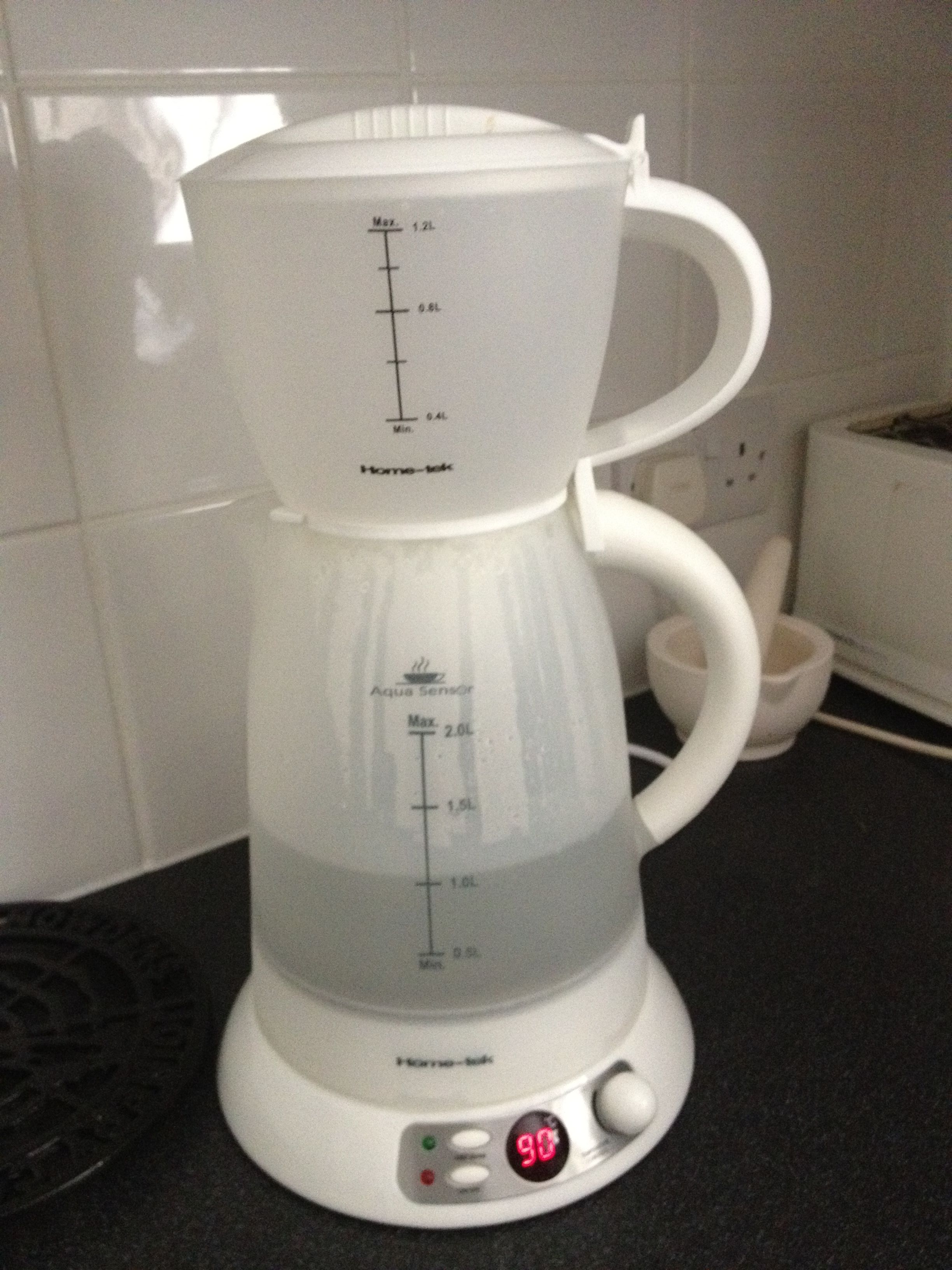
Like an ambitious third cat switching from a heart rate monitor to a power meter, Team Tea has upped its game this week by investing in a valuable piece of hardware: the Home-Tek Aqua Sensor Kettle and Water Filter.

With this handy device, we are now able to prepare each brew to the manufacturer’s recommended temperature and keep the water warm for a second pot should we so desire. And we did very much desire another swig of a certain brew last weekend – so come with us now as we describe the highs and relative lows of our tour of teas. Strainers at the ready – let’s par-tea!

Stage 7, Saturday 7 June

Tomblaine – La Planche des Belles Filles, 199km
Winner: Chris Froome (Sky)
Brew: Thé Des Alizes
They say: “A green tea enlivened by flower petals and delicately scented with pieces of white peach, kiwi and watermelon. The green tea and the juicy freshness of the fruit are wonderfully balanced. Can be drunk hot or iced.”
We say: On screen, the sensational double act of Froome and Bradley Wiggins taking the stage win and the yellow jersey respectively; in our mouths, a much less impressive double-act of fruits and green tea. Peach dominates, but who really wants peaches in their cuppa? Well-blended, so not the unpalatable taste you might expect, but for us it’s not worth a revisit. A curiosi-tea.

Stage 8, Sunday 8 June
Belfort – Porrentruy ,157.5km
Winner: Thibaut Pinot (FDJ–BigMat)
Brew: Margaret’s Hope
They say: “Fruity with a great character. Special feature: it is invigorating and dark because of the greater proportion of Assam tea plants (20%) than Chinese plants on the plantation, something that is not very common in Darjeeling. It is a much sought after tea, which Darjeeling enthusiasts find ideal in the morning.”
We say: If yesterday’s tea was an oddi-tea, today’s was back to normali-tea. You could, if you wished, happily throw a splash of cow juice in this one. But as cycling history fan Thibaut Pinot proved with a thrilling solo stage win which got his directeur sportif Marc Madiot banging his car door with joy, a love of tradition doesn’t mean you have to be dull. This brew has a lovely malty Assam base and a rich, woody aftertaste. The overall flavour is deep and enriching. Unquestionably our top tea thus far.

So there we are. Margaret’s Hope leads our tour of teas – and, appropriately for British cycling’s domination of the Tour, it’s the only brew in our selection that has an English name. Who will be its competition for the top of the tea GC? We’re giving no tea-sers. Come back soon to find out…


Tea de France

July 4, 2012

Tea and cake: they go together like helmet and head, or spoke and nipple. It is cycling’s perennial double-act of refreshment and sustenance. Yet many cyclepeople consider cake to be the star rider and tea the humble domestique. Well, not in our gaff, buster.

My romantical partner Littlejen is Queen Tea. A Zimbabwean by birth, she settled in this country partly because of its love of the old Rosy Lee. So when it came to choosing a hotel for our recent trip to Paris, we were pleased to stumble upon one that specialised in teas from around the world. You could say we were – yes! – absolutely tea-lighted.

And now we can share that delight with you, valued readers, because Jen has purchased a selection of the teas offered to us on our trip to the French capital. They’re all from a French company called Le Palais Des Thés, and co-incidentally there’s a bike race on across the channel at the moment. So naturally I thought, why don’t we sup a different brew for each of the six weekend stages of that famous bicycle race, then express our opinions about them? We could call it Drinking Teas From France While Watching Men Racing On Bicycles In That Same Country. Then I though, no, let’s call it Tea de France instead. Come with us now as I reveal what happened, tea-wise, at the opening weekend.

Prologue, Saturday 30 June
Liège-Liège, 6.4km
Winner: Fabian Cancellara
Brew: Thé des Amants
They say: “Rich and sensual, Thé des Amants is a heady, fragrant blend of black tea, apple, almond, cinnamon and vanilla, spiced up with a hint of ginger.”
We say: You’ve been waiting 49 weeks for the Tour to roll around again – so there ain’t no way you’re not going to enjoy the prologue. Similarly, I reckon it’s impossible to dislike this light, buoyant tea. Ah, cinnamon – lovely cinnamon: the giddy fragrance of joy. Just sniffing the pot will put a smile on your face, and days later I can still recall the breezy taste. The only possible downside of this brew is that, like a GC contender with a series of early-season victories, the trajectory of our tea odyssey – or ody-tea – may have peaked too soon…

Stage 1, Sunday 1 July
Liège-Seraing, 198km
Winner: Peter Sagan
Brew: Thé des Fakirs
They say: “A tasty, scented blend of green tea and spices (cardamom, clove) with a hint of citrus fruit. Delicious served either hot or iced.”
We say: Sagan, the steely Slovak sprint sensation, locked onto the wheel of good-natured time trial legend Fabian Cancellara within sight of the finishing line – and this tea is also very much a coupling of two distinct halves. The green tea dwells stolidly on the bottom of the palate while the fruity bits sit lightly on top. Pleasant, but nothing to delight or amuse. Also, it looks a bit stew-like in the pot.

So that was the Prologue and the first stage. Who knows what teas we’ll be downing this weekend? Well, I know, obviously, and so does Jen. You’ll just have to pop back soon to find out…


French horns

June 29, 2012

Hello again! It’s been a while, hasn’t it? And as a discerning consumer of webular content, I know exactly what you’re after: a succinct and reasonably diverting explanation for my absence. Well, your luck’s in, sunshine, because that’s precisely what I am about to furnish your eyeballs with. In a nutshell, I was preparing for a trip to France; I then travelled to France; and now I have returned from France. That means there’s going to be a lot of French stuff in this post. So, Francophobes, treat this paragraph as your sortie and leave, as they say, toot sweet. (Sortie means ‘exit’, which is a True French Fact what I have learned. Another True French Fact lodged in my head is that quotidien kind of means ‘quotidian’. This pleases me: their word for everyday is far from everyday. And it makes me wonder how you, the French-despiser who is about to depart from this blog, can possibly dislike a language that rejects the humdrum so emphatically. Begone! The French are simply too good for you.)

I’ll begin my account where our trip ended: at Luxembourg Gardens, sheltering from a sudden downpour with Littlejen and a couple of dozen Parisians. Young children are screaming with delight at the fierceness of the downpour while a quartet of indifferent students sit at a table smoking dope. Nobody is bothered by either party. About 30 feet away from our shelter, the joyful blast of a school’s brass band refuses to be silenced by the sheeting rain clattering on leaves and the roof of the bandstand. It is this – the sound of trumpets and their tubular cousins blown enthusiastically – that has been the soundtrack of my holiday. For I can honestly say I have heard more ebullient parping in one week than I had for years.

The bulk of the brass-based jollity occurred during the Ardechoise sportive, which was part of my four-day cycling sojourn in the Ardeche region before I met up with Jen in Paris. It was during my negotiation of an otherwise unremarkable corner on the 125km route that a small group played a military-style march; within a few miles, I had passed a sousaphone-wielding funk outfit. Later, as I tucked into my complementary post-ride pasta, a trombonist casually led a mariachi band into the food tent where they struck up a rousing and somewhat ramshackle version of Seven Nation Army. Whether hungry, tired or both, the sportive’s 12,000 competitors were destined to by buoyed at some point by a brigade of puff-cheeked chaps. For that, I can wholeheartedly say: thank you, proud brassmen of France!

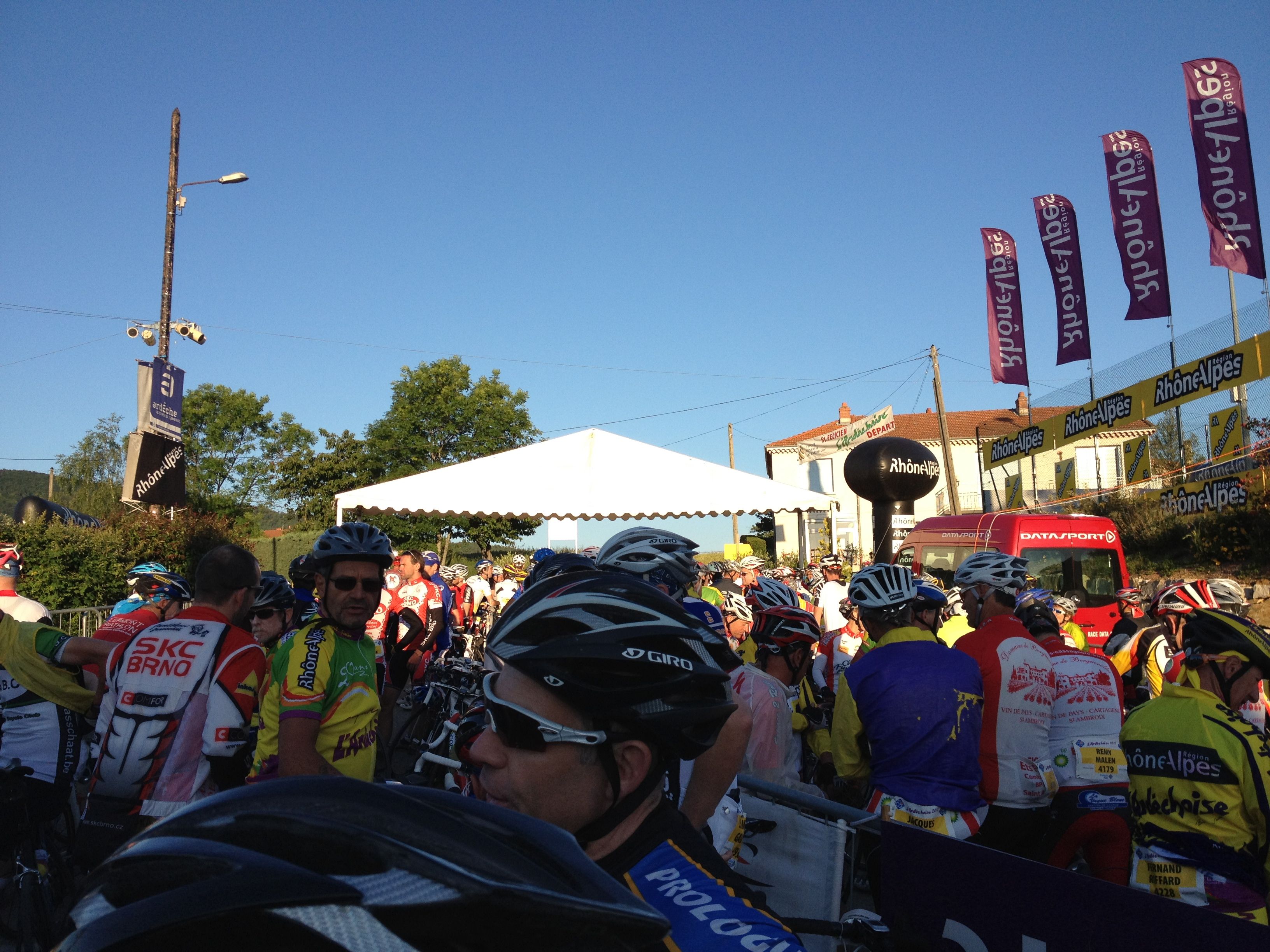
This was my third sportive on foreign shores, and all three trips benefitted from London Dynamo’s seamless organisation. My previous two jaunts with the club were in Italy – the Nove Colli last year and the Granfondo Pinarello in 2008. For me, the main difference between my French adventure and the Italian events, and the factor that made this sportive slightly harder than I anticipated, was the absence of any flat roads: I started on a climb (see photo above), finished on a whizzy 20km descent and spent the five hours in between going up and down while the temperature rose to a giddy peak of 24C. The climbing in the two Italian sportives was sandwiched between flat starts and finishes, but those, too, presented their own challenges: I was on the drops pushing 30mph at the start of the Pinarello, and I struggled to find a rhythm in the dull the final kilometres of the Nove Colli.

There are other differences. The food on offer at the Italian feed stations was more varied, although in France we had the option of washing down a roll with a cup (or two, or three) of red wine. The Italian sportives generally had more of a carnival atmosphere: at the Nove Colli, many dressed up in bandanas to ride in Pantani’s former training ground, while the locals’ daredevil descending at the Pinarello often seemed, to this timid Englishman at least, to have an air of look-at-me theatricality. There were thousands of club kits on display in Italy, whereas the official yellow and magenta sportive jersey and familiar generic clothing brands were a commoner sight at the Ardechoise. (Speaking of which, I had the pleasure of drafting a competitor by the name of Beatrice Defour for a number of miles this year. So that’s what a sleeveless white Assos skinsuit looks like. God bless triathlon! God bless France! God bless Beatrice Dephwoar!) And the Italian events were simply louder – much louder. Last year I gauged my closeness to the top of the crank-punishing Barbotto by how much I could hear of Metallica’s cover of Whisky In The Jar blaring from the sound system – and at the finish, the excitable MC was only to happy to volubly announce the presence of a certain “LON-DON DEE-NA-MOOOOOH!”

For me, though, it is French brass bands that capture what should be the true spirit of sportive riding. Yes, there may be times when you feel completely alone – blissfully so as you fly up a climb, or grinding away, mired in your own private hell – but the blast of a trumpet, a trombone’s glissando, or the oompah of a tuba provides a perky, galvanising sense of togetherness. Sound the horn! A fanfare, please! Like those children shrieking in the rain, or the students taking a drag on a joint, we are all here together, each of us seeking out our own type of fun.


Coming up with a new nickname for José Rujano

May 31, 2012

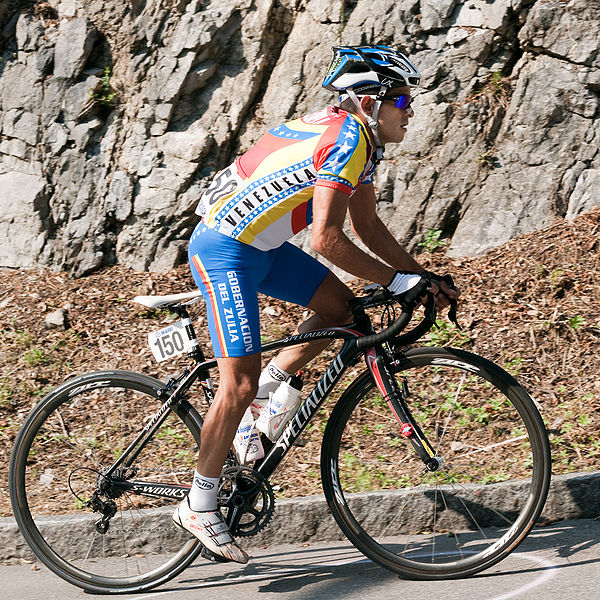
During the Giro, I learned that José Rujano’s nickname is “El Condor” – which, if I am to trust the services of Google Translate, is apparently Spanish for “The Condor”. Like the soaring bird of prey, the Venezuelan climbing specialist displays his magnificence at high altitudes. In that sense, the name is apt.

But condors are enormous, heavy birds, while Rujano is a light, relatively compact fella. More pertinently, lanky Dutchman Robert Gesink is known as “The Condor of Varsseveld”, and we really can’t have two condors in professional cycling. That would be like having two Cannibals or two Pistoleros or two Tyler Hamiltons, one of whom somehow vanished while in the womb. Utter madness.

So we need a new name for José. Littlejen suggested “The Dassie”, which is a small creature that dwells in mountainous regions. But dassies are found in Africa, not South America, which is a shame because I can’t help noticing that the cute little critters bear a slight resemblance to little José.

Instead, I suggest cyclepeople should use the name of another bird of prey when referring to the Androni team’s upwardly-bound sensation. Like a condor, it is found in Venezuela (and, in a pleasing co-incidence, it too shares its name with an independent bicycle brand). But unlike a condor, this feathery killer is small yet robust, similar to the man himself. And the moniker I’ve come up with also incorporates Rujano’s home state, as well as gifting many wordplay opportunities to sports commentators who seek to praise the multiple Giro stage-winner’s magical climbing ability and wizard skills.

Ladies and gentlemen, I hereby dub José Rujano… The Merlin Of Merida.

I hope this one will fly.


Lance Armstrong: closing the gap between satire and reality

May 20, 2012

‘What Eells said he found interesting is that after years and years of denials, that in the hours spent with Armstrong researching the article, that the rider didn’t once claim not to have doped.’

‘”Okay, here goes,” Armstrong said. “Um, in the late ’90s and early 2000s, I took, um… You see, in order to give myself a better chance of winning, I… Yes, there were instances during the Tour when…”‘


A mysterious club

May 18, 2012

It seems incredible, but there really was a brief period in my life when I didn’t know what a flat white was. For two giddy months, I would make vague expressions of interest when cyclepeople of my acquaintance expressed their delight at this caffeine-based innovation, until one day my chum Phipsy mistook my proud boast of ignorance as a plea for help and tweeted a succinct description of how a flat white is constructed. So that was the end of that.

More recently, I stubbornly resisted learning the definition of the jazzy new word “soundslide”, but in that instance curiosity got the better of me after just a couple of weeks, because the soundslide in question featured none other than former Dynamo clubmate and all-round nice person Sam Humpheson of Look Mum No Hands! fame. When he was building my Merlin some years ago, Sam overruled a misguided decision I had made and, quite rightly, wrapped my handlebars in white bar tape. Not black, as I had foolishly requested, but white, the hue of speed and elegance. So when wise Sam speaks, I must listen – even if he happens to be speaking via the medium of (and I do so dislike the word) a soundslide. Ugh.

In principle, though, I stand by both of my short-lived campaigns of willful ignorance. New words should be an aid to your self-expression or help you engage more fully with the world; if they do neither, they’re simply clutter. And now, trying its best to clutter up my consciousness, comes another curious phrase: the “Car Club”.

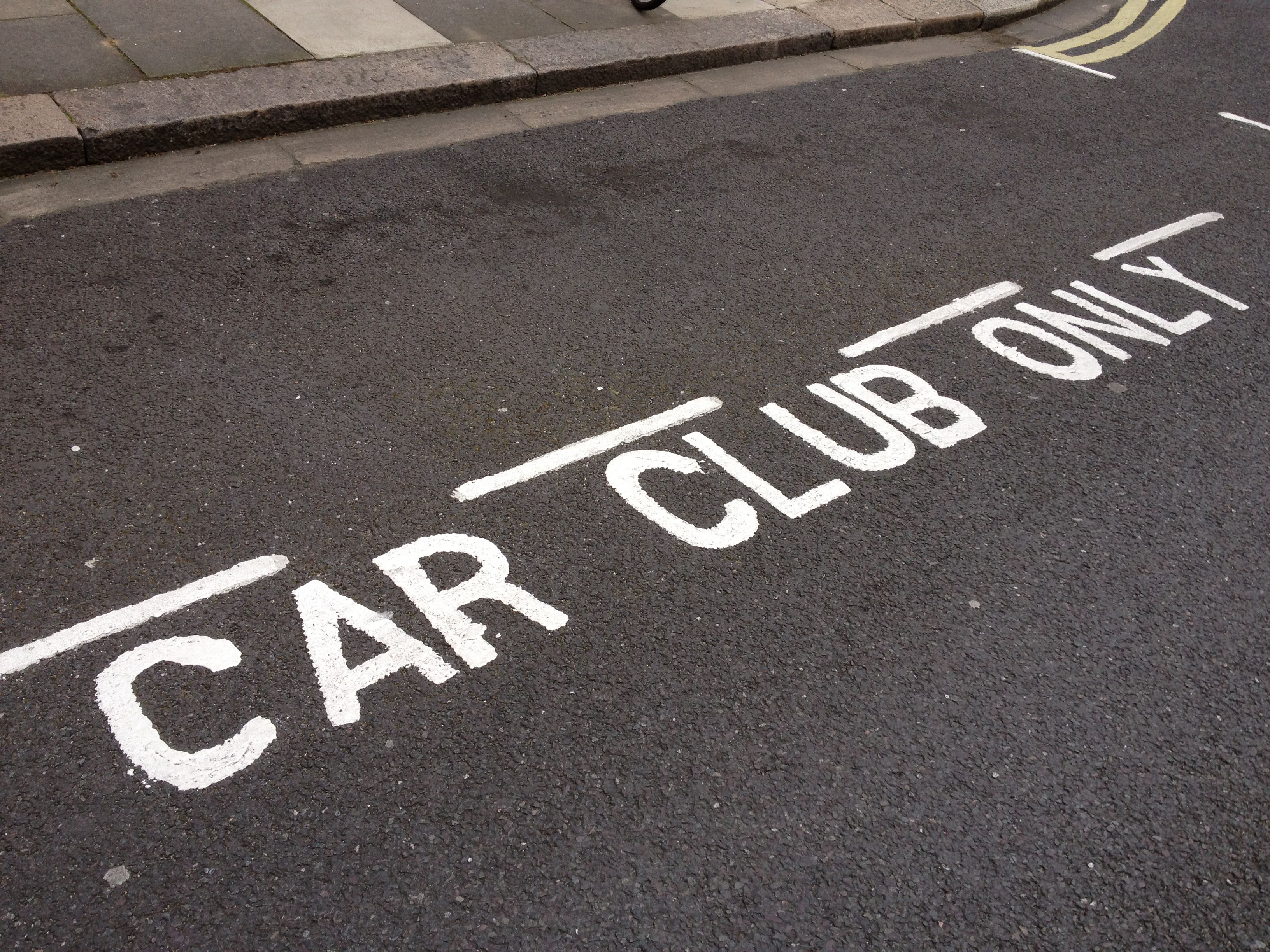
I think this mysterious club must be the council’s doing, as its sole manifestation has appeared on an area of tarmac opposite the entrance to our building. So far, it has been quite easy to avoid discovering anything about the Secret Order Of The West London Car Club because no one has bothered to offer an explanation. I would like to think it involves men in thick, ornate moustaches and goggles sharing their love of vehicles that require a hand-crank to start them up, but at the moment there’s just a metal pole with a notice and the warning “CAR CLUB ONLY” painted imposingly in front of two parking spaces.

Very strange, I’m sure you’ll agree.

The specially designated car club area looked like this two days ago:

This is what it looked like yesterday:

And that, basically, is what it has looked like since it appeared.

I realise, of course, that any sort of club has to create an air of exclusivity to stand a chance of becoming a success. But the mysterious Car Club, judging by its perpetually empty area, doesn’t seem to have any members at all. And it has nabbed two of the best spots on a road that rarely has any free parking spaces. The ruddy cheek!

In other transport-related news, the management company that runs our flats has overturned a preservation order so they can hack down a tree that is impinging on a garage which a few residents are lucky enough to use. Well, I say they’re lucky, but I’ve never really envied them: the garage is only accessible from two adjacent roads and there are always parking spaces outside the main entrance anyway (see below) – which, to me, rather seems to defeat the point of the whole deal.

The garage only has a limited number of spaces for bicycles, so the management company installed bike parking stands along the pavement a few years ago to cope with the increase in cycle usage.

Sadly, a lot of the bikes are regularly vandalised or stolen – although the local ruffians seem to have overlooked one bike which is sporting an exclusive Harrods saddle cover, fashioned from the finest type of plastic bag the Knightsbridge emporium has to offer.

A classy piece of kit – but I digress. I was, you may remember, pondering the nature of the car club, and while I have no intention of uncovering its purpose, I strongly suspect it is some sort of vehicle-sharing scheme. It’s probably a well-meaning initiative, but like a flat white (translation: yet another combination of milk and bean juice) or a soundslide (an audio recording with photo slideshow), it’s just a phrase for a concept that has more or less existed in another form: everyone, after all, will either give someone a lift in their car or briefly lend it out at some point in their lives. New phrases and words emerge because we have a basic human desire for change; effecting actual change is much harder.
And what’s really needed in this case is some co-ordination between the council and the estate management company so that everyone benefits: turn the residents’ garage into a cycle park, thereby saving a tree, let motorists take up the spare parking capacity on the road and get rid of the unused Car Club. Oh, if only outcomes were as easy to create as phrases and slogans…